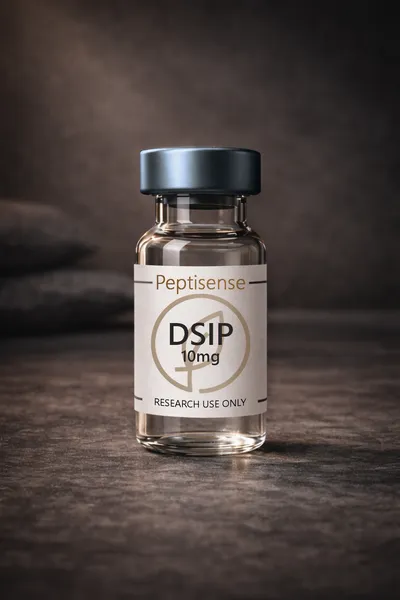
RESEARCH PEPTIDE OVERVIEW
DSIP
This page provides an educational overview of how this compound is referenced in research contexts and how it is categorized within biological signaling frameworks.
DSIP is a synthetic peptide discussed in biological literature in relation to sleep-associated neuropeptide signaling and central nervous system regulation. It is referenced within contexts that describe coordination of neural signaling patterns.
Sold for laboratory research only.
Peptide Overview
DSIP is discussed in biological literature in relation to neuropeptide-mediated signaling pathways, circadian-related regulation, and system-level coordination within neural systems. This classification reflects how the peptide is positioned within broader biological signaling frameworks, without reference to outcomes or directed use.
Product Format & Classification
This compound is offered in a research format intended for educational and laboratory contexts.
FORMAT
Lyophilized peptide
QUANTITY
10 mg per vial
CLASSIFICATION
Assigned exclusively to the research domain
Non-medical, non-therapeutic positioning
Sourcing & Quality Standards
Responsible research emphasizes sourcing transparency and compound integrity.
This product aligns with the following standards:
Research & Classification Notice
This product is intended exclusively for laboratory research. The information provided supports contextual understanding of the peptide and its biological classification.
Finding Published Research
Scientific research on peptides is published independently by universities, research institutions, and pharmaceutical companies.
Because research findings depend on study design, model systems, and experimental context, this site does not summarize or interpret study results directly on product pages.
If you wish to explore published research related to this compound, public scientific databases provide direct access to original publications.
How to explore published research:
- 1. Visit pubmed.ncbi.nlm.nih.gov
- 2. Enter the compound name shown on this page
- 3. Review publications from peer-reviewed journals
- 4. Interpret findings within the original study context